

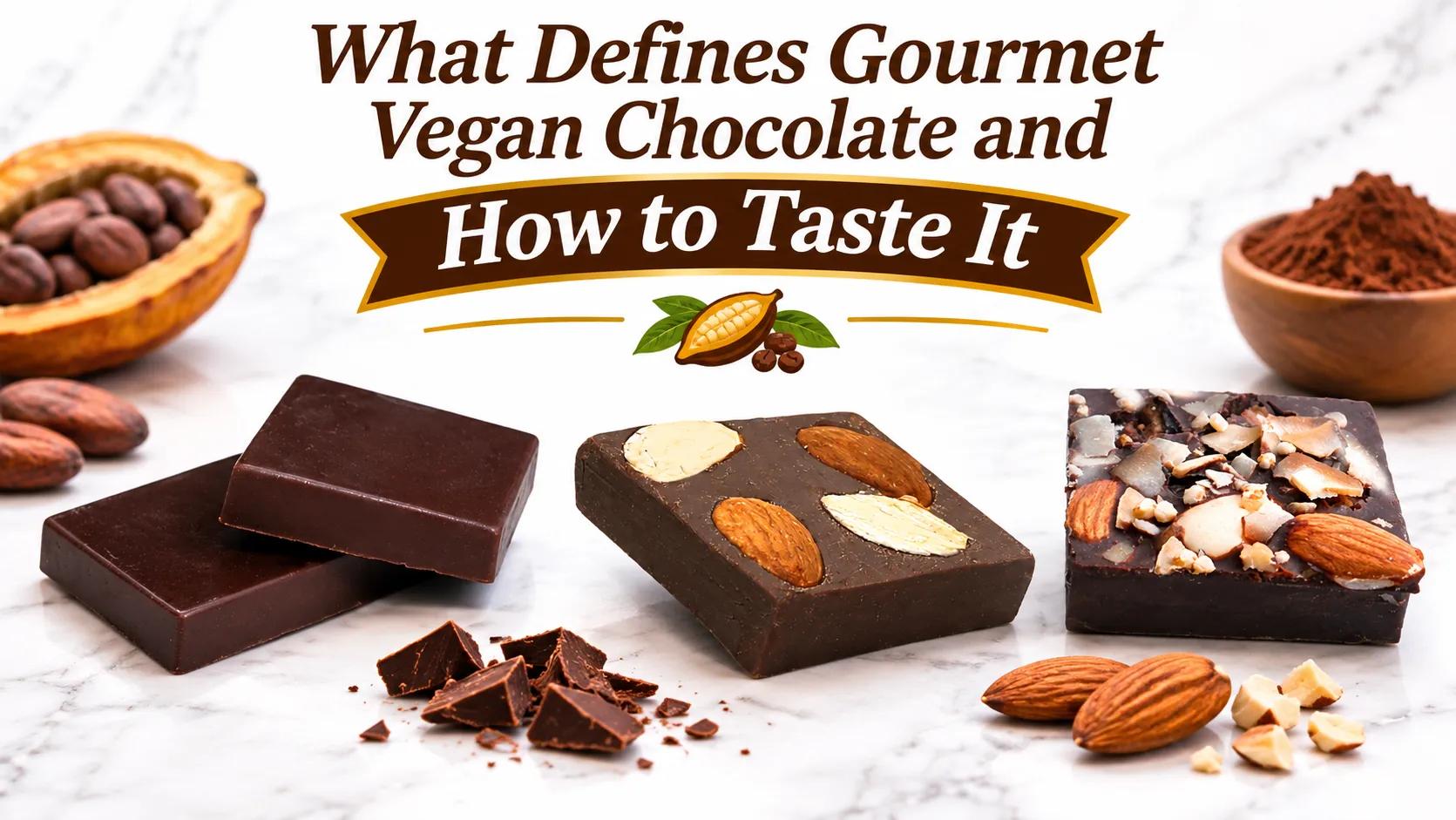
Chocolate labeled gourmet and chocolate labeled vegan describe two separate qualities. One refers to the level of care in sourcing and production, and the other refers to the absence of animal products. When both apply, the product is judged by its ingredients, its craft, and its flavor. This article explains how those qualities are defined and how to taste the chocolate in a structured way.
What the Terms Mean
Neither word has a strict legal meaning for chocolate in the United States. The Food and Drug Administration does not define "gourmet" or "vegan" for food labels. Each maker sets its own standard, so buyers benefit from reading ingredient lists and process descriptions.
In practice, vegan means that no milk, honey, or other animal-derived ingredients are used. Gourmet usually points to carefully selected ingredients, limited production, and attention to flavor. Gourmet vegan chocolate combines these two ideas in one product.
Core Traits of Gourmet Vegan Chocolate
Several traits are commonly used to judge quality. None of them guarantees a good result alone, but together they give a clear picture.
Quality of the Cacao
Cacao is the base of every bar, so its quality sets the ceiling for flavor. Cacao grown in different regions develops different notes. Beans from Madagascar are often described as having red fruit notes, while beans from Ecuador are often associated with floral aromas. Makers that name the origin of their beans give buyers a way to compare products.
Plant-Based Ingredients
Traditional milk chocolate relies on milk powder for creaminess. Vegan versions use other ingredients to supply body and a mild sweetness. Common choices include oat powder, coconut milk powder, rice powder, almond paste, and cashew paste. Each one adds a different character. Coconut tends to give a tropical note, oat gives a soft grain flavor, and nut pastes add richness.
Dark chocolate can be vegan with very few changes, since it often contains only cacao, sugar, and cocoa butter. Buyers should still read the label, because some dark bars contain small amounts of milk fat.
Sugar and Other Additions
Sugar type affects both flavor and suitability. Some refined cane sugar is processed with bone char, so makers often use organic cane sugar, coconut sugar, or beet sugar instead. Short ingredient lists are common in this category, and some makers leave out soy lecithin and artificial flavoring so that the cacao is easier to taste.
Craft and Production
Careful roasting, refining, conching, and tempering shape texture and flavor. Roasting develops aroma. Refining reduces particle size so that the chocolate feels smooth. Conching mixes the chocolate for hours and releases sharp acids. Tempering gives a glossy finish and a clean snap. Small batch production allows a maker to adjust each step by taste.
How Gourmet Differs From Standard Vegan Chocolate
Standard vegan chocolate meets the dietary definition and may be made in large volumes with blended beans. Premium vegan chocolate generally involves more attention to origin, process, and ingredient choices. The difference is one of degree, and no single test separates the two. Buyers can compare cacao origin, ingredient length, production scale, and available information about the maker.
Rawmantic® Chocolate is one New York company that makes handmade chocolate bars, and its published ingredient and process information is an example of the kind of detail buyers can review when comparing small makers.
How to Prepare for a Tasting
Preparation helps make the results easier to compare.
Choose chocolate stored in a cool, dry place and bring it to room temperature, around 65 to 70 degrees Fahrenheit.
Taste in a room without strong odors from food, candles, or cleaning products.
Use plain water or unsalted crackers to reset the palate between samples.
Start with the mildest chocolate and finish with the strongest or most heavily flavored one.
Tasting several bars side by side makes differences in origin, roast, and sweetener easier to detect.
Steps for Tasting Chocolate
A structured method helps the taster notice details that are easy to miss when eating quickly.
Look
Examine the surface. Well-tempered chocolate has an even, glossy appearance. A dull surface or white streaks may point to heat exposure or moisture, which is called bloom. Bloom is not harmful, but it can change texture.
Listen.
Break a small piece. A clean, sharp snap suggests proper tempering. Soft chocolate may bend or crumble, which can happen with some plant-based recipes that use coconut oil or other soft fats.
Smell
Hold the piece close and note the aroma. Common descriptions include fruit, nuts, flowers, coffee, caramel, earth, and wood. A burnt or sour smell may indicate a flaw in roasting or fermentation.
Taste and Melt
Place a small piece on the tongue and let it melt slowly. Avoid chewing at first, since melting releases flavor gradually. Notice how the texture changes. Smooth, even melting is typical of well-refined chocolate. A grainy or waxy feel can point to coarse particles or certain fats.
Evaluate the Finish
After swallowing, note how long the flavor lasts and what remains. The finish may be bitter, fruity, nutty, or sweet. A longer finish with changing notes is often described as complex.
Flavor Notes in Vegan Chocolate
Vegan chocolate has some flavor traits that tasters can learn to recognize. Dark bars made from cacao, sugar, and cocoa butter show the character of the beans most directly. Vegan milk-style bars have a softer, creamier profile that comes from the plant ingredient. Oat tends to taste mild and slightly toasted. Coconut can taste sweet and tropical. Almond and cashew can taste buttery.
Cacao percentage gives another reference point. A higher percentage usually means less sugar and a more intense cacao flavor, while a lower percentage tastes sweeter.
Storage After Purchase
Chocolate keeps best in a cool, dry place between 60 and 68 degrees Fahrenheit, away from sunlight and strong odors. It should be wrapped tightly because cocoa butter absorbs smells. Refrigeration is generally not advised because moisture can cause sugar bloom.
Summary
Cacao quality, plant-based ingredient choices, careful production, and clear labeling define gourmet vegan chocolate, since no legal standard exists. Buyers who read ingredient lists, check the origin of the beans, and taste with attention to appearance, snap, aroma, melt, and finish can judge a bar on its qualities. The same approach applies to any premium vegan chocolate, whether it is dark or creamy in style.